
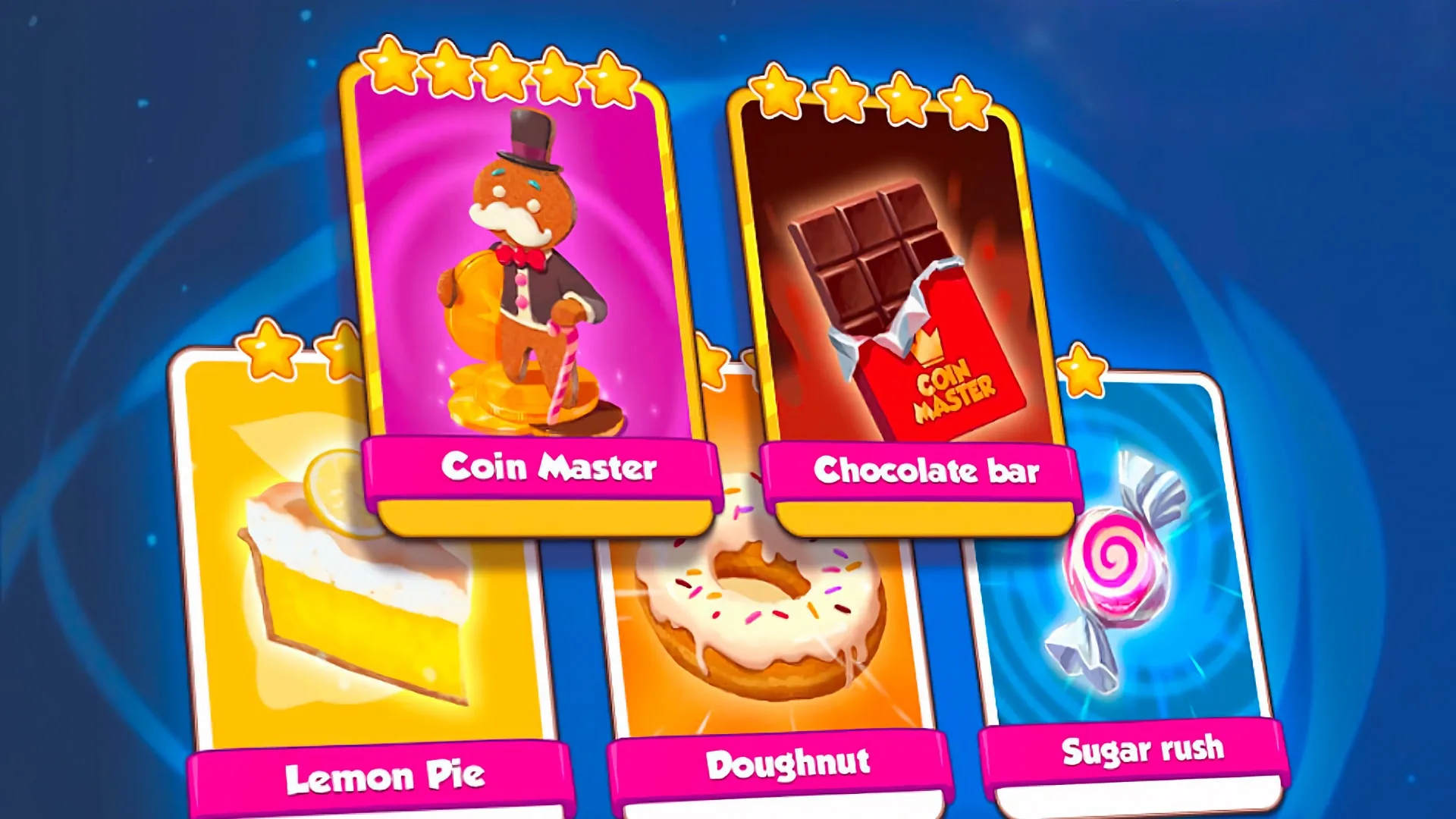
Cards are one of the most valuable systems in Coin Master — and one of the most misunderstood. They’re not side collectibles. Every time you complete a card set, you receive a guaranteed reward: spins, coins, or pet XP. Unlike the slot machine, which is random, card set completions always pay out. That makes building your card collection one of the most reliable ways to accelerate your progress.
How Coin Master cards work
Cards come from chests, which you buy using coins earned from spins. Each village has its own card set, and filling that set requires pulling the right combination of cards from chests. Some cards are common and drop frequently. Others are rare or gold — and those are the ones that will block you for a long time if you don’t know what to do with them.
There’s no other way to complete sets. You can’t buy individual cards, and you can’t earn them from the slot machine. Chests are your only source, which makes spin management and coin saving directly tied to your card progress.
Card rarities
Every card in Coin Master has a rarity tier — common, rare, extremely rare, and gold. The rarity determines how often the card drops from chests.
- Common cards drop frequently from any chest type and will rarely block you
- Rare cards have a low drop rate and can block a set for days or weeks
- Extremely rare cards are the hardest non-gold cards in the game; specific ones like Martian Lettuce and Excalibur are notorious for how long they take to find
- Gold cards are functionally the rarest because they can’t be traded normally — you can only trade them during special Gold Card Trade events
The practical implication: when you’re stuck on a set, check whether you’re missing a rare card or a gold card. The solution is different for each.
Card sets and their rewards
Each card set in Coin Master rewards you with spins, coins, pet XP, or some combination when completed. The rewards scale with how far into the game you are — later sets tend to pay out more spins and coins, which keeps pace with the escalating cost of building later villages.
Completing sets is one of the few reliable, non-random income sources in the game. Players who ignore card collection and focus only on spinning and raiding will fall behind players of the same level who actively pursue set completions. For a full breakdown of sets and their rewards, see Coin Master Card Sets.
Where cards come from
Chests are the primary source — wooden, golden, magical, and seasonal chests all drop cards, with higher-tier chests giving better odds on rare and gold cards. See Coin Master Chests for a full comparison.
Events are the second-best source. Viking Quest concentrates chest earning into a single session, making it one of the best events for card hunting. Map events like Magical Land also drop chests along the path. Keep an eye on the events calendar for when these are active.
Free card links — Moon Active occasionally distributes free cards through their social channels. These are rare but worth claiming when available.
Trading — you can send cards to friends and teammates once per day per card. This is the fastest way to complete a set when you have the card a friend needs and they have the one you need. Gold cards can only be traded during Gold Card Trade events.
Gold cards
Gold cards are the hardest part of the system. They look like regular cards with a gold border, but they can’t be traded outside of designated Gold Card Trade events. Until one of those events is active, your only options for getting a missing gold card are:
- Buying chests (magical chests have the best gold card odds)
- Using a Joker card to substitute any missing card
- Waiting for a Gold Card Trade event and coordinating with friends or trading groups
Gold card trading events have specific rules about which cards can be traded, how many, and for how long — none of that is fixed. When one is active, check the in-game text for the current rules rather than relying on outdated guides. For the full picture, see Coin Master Gold Cards.
The Joker card
A Joker card lets you substitute any missing card in a set — including gold cards. It’s the most powerful card tool in the game, which also means it’s easy to waste.
The cardinal rule: don’t use a Joker on a rare card that could still drop from a chest. Save Jokers for the specific scenario where a gold card is the last thing blocking a set with a valuable completion reward and there’s no Gold Trade event on the horizon. See Coin Master Joker Card for everything on how to use it well.
Chest strategy for card hunting
Not every chest is worth buying for every situation:
- Wooden chests are cheapest but only useful if you’re missing common or low-rarity cards
- Golden chests are the workhorse — good odds across the rarity range and affordable enough to buy in volume
- Magical chests are expensive but have the best odds on rare and gold cards — worth using when you’re targeting a specific high-rarity card
- Seasonal chests are event-specific and usually the best value during their active window
The practical approach: open chests on each new village until duplicates start dominating your pulls. When most of what you’re getting are cards you already have, that village’s pool is largely exhausted — move on or switch to a different chest type.
Boom villages improve card drop rates, particularly for rare and gold cards. Pause your village progression when you’re in one and buy chests before moving on.
Cards hub
Everything below sits under this guide. Each page goes deeper on its specific topic:
- Coin Master Card Sets — how sets work, rewards, and strategy
- Coin Master Gold Cards — what gold cards are and how to get them
- Coin Master Joker Card — what it does and when to use it
FAQ
How do I get cards in Coin Master?
Cards come from chests, which you buy with coins. Higher-tier chests (golden, magical) give better odds on rare and gold cards. Some events also award chests directly.
Can I trade cards with friends?
Yes — you can send one copy of a card to a friend per day. Gold cards can only be traded during special Gold Card Trade events. You cannot receive anything in return through the in-game system, so most trading happens through informal coordination in Facebook groups or with teammates.
What happens when I complete a card set?
You receive a reward immediately — typically spins, coins, or pet XP. The size of the reward depends on which set you completed. Later sets in the game generally pay out more.
Why can’t I find a specific card?
If the card is rare or extremely rare, it simply has a low drop rate from chests. If it’s a gold card, you can only get it from chests during boom villages, from a Joker card, or by trading during a Gold Card Trade event. There’s no shortcut — it’s a grind.
What is the rarest card in Coin Master?
Among the community’s most notorious blockers are Martian Lettuce and Excalibur, both classed as extremely rare. Gold cards generally behave as the functional rarest cards because of the trading restriction on top of the low drop rate.
Do card sets reset when I move to a new village?
No. Your card collection is permanent. Moving to a new village adds new card sets to complete but doesn’t erase progress on existing ones.