Highest-grossing video game franchises 2026: ranked by revenue
Mario leads at ~$53.85B. Ranked list of the highest-grossing video game franchises of all time, updated.


Most people assume the highest-grossing video game franchise is either Pokémon or Call of Duty. It is neither. Mario — a plumber from 1981 whose games include a go-kart racing series, a party game, and a licensed theme park — has quietly accumulated more gaming revenue than any other franchise in history. Below is the full ranked list, with verified figures and the context behind each one. For broader market context, see our video game industry statistics hub.
A note on methodology
Revenue figures across franchises are not always directly comparable. Arcade-era titles like Space Invaders and Pac-Man include estimated gross from physical arcade cabinets — a revenue model that no longer exists. Modern franchises like Fortnite generate revenue entirely through in-game purchases with no box sale. Pokémon’s $35B gaming figure excludes trading cards, merchandise, and films; the total media franchise is estimated at $115B. Where figures are estimates rather than verified company disclosures, this is noted.
Highest-grossing video game franchises by revenue
Mario leads all franchises at ~$53.85 billion; figures mix verified disclosures and industry estimates.
| Franchise | Revenue |
|---|---|
| Mario | $53.9B |
| Pokémon | $35.4B |
| Call of Duty | $35.0B |
| Pac-Man | $24.0B |
| Candy Crush | $23.0B |
| Fortnite | $22.0B |
| Dungeon Fighter Online | $21.8B |
| Space Invaders | $20.0B |
| Street Fighter | $11.3B |
| Grand Theft Auto | $9.7B |
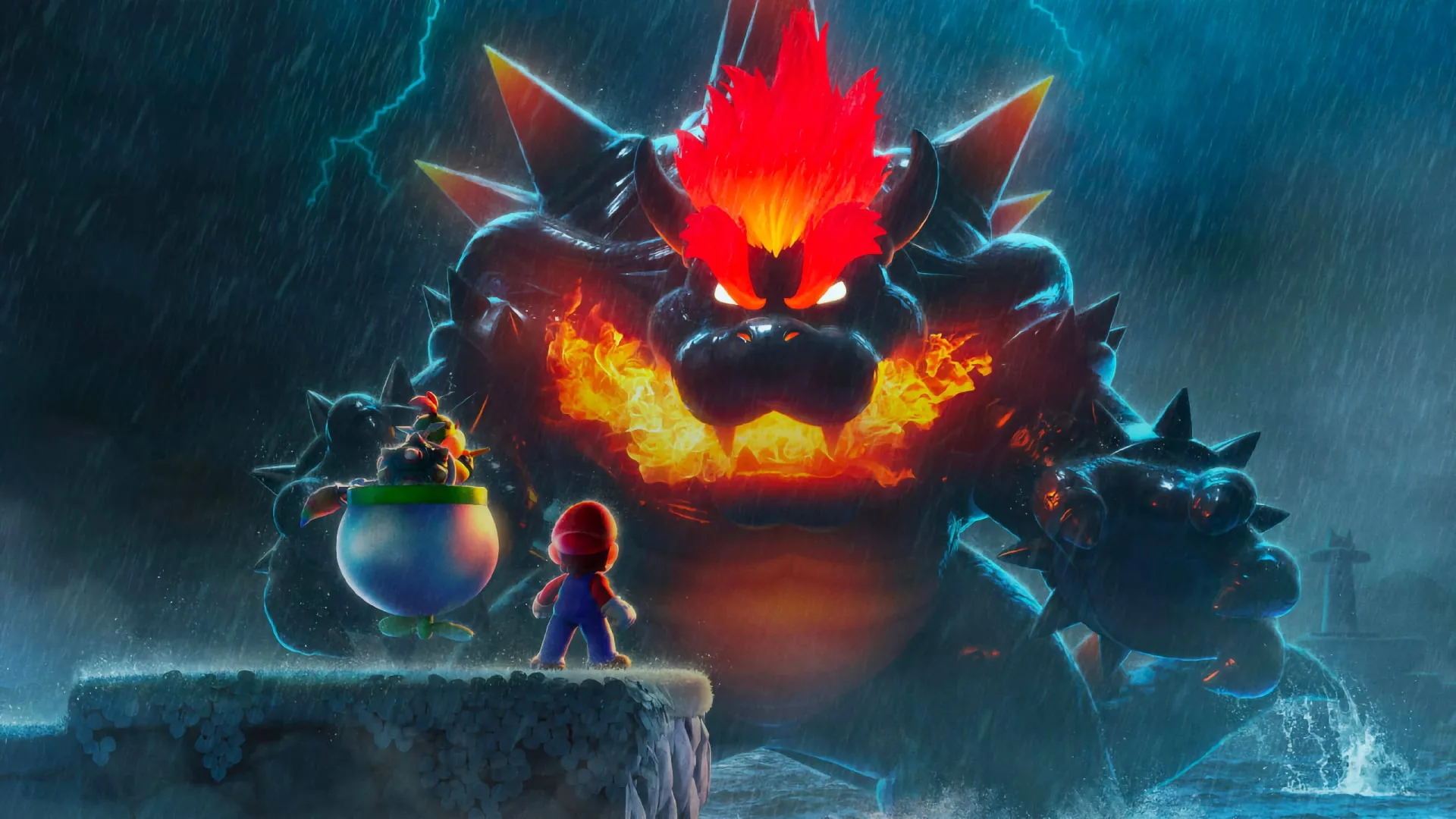
Mario — ~$53.85 billion
Mario is the highest-grossing video game franchise of all time, with an estimated $53.85 billion in gaming revenue. It is also the best-selling franchise by units, with over 893 million copies sold across more than 200 games since 1983. The Super Mario branch alone accounts for 499 million of those sales.
What makes Mario’s revenue figure remarkable is how it is built. Nintendo does not rely on a single blockbuster — it earns across Mario Kart, Mario Party, Super Smash Bros., Paper Mario, RPG spin-offs, and the mainline platformers simultaneously. Add in a 2023 film that grossed $1.36 billion and theme park licensing across Universal parks in Japan, the US, and Singapore, and the Mario brand generates income streams most publishers cannot replicate within a single franchise.

Pokémon — ~$35.4 billion (gaming); ~$115 billion total media
Pokémon’s gaming revenue stands at approximately $35.4 billion — but that understates the franchise’s true scale. When trading cards, merchandise, the anime, and films are included, Pokémon is the highest-grossing media franchise of all time at an estimated $115 billion, ahead of Hello Kitty, Mickey Mouse, and Star Wars. The franchise generated over $12 billion in 2024 alone.
The gaming side spans mainline RPGs (now approaching 500 million units sold across all titles), Pokémon GO (over $6.1 billion in lifetime mobile revenue), the trading card game, and Pokémon Unite. The TCG alone is one of the highest-selling collectible card games in history. Pokémon’s durability comes from its ability to function as a cross-generational franchise — the same child who played Red and Blue in 1999 is now buying Scarlet and Violet for their own children.

Call of Duty — ~$35 billion
Call of Duty has generated approximately $35 billion in lifetime revenue and surpassed 500 million copies sold as of October 2024. It is the fourth best-selling video game franchise by units and has produced one of the most consistent annual revenue streams in the industry for over two decades.
The franchise has released at least one major title almost every year since 2003. Its revenue is split between premium game sales and in-game purchases — particularly through Warzone, the free-to-play battle royale that brought the franchise to an entirely new audience without a box price. Since Microsoft’s acquisition of Activision Blizzard in 2023, Call of Duty is now the anchor of Xbox Game Pass and one of the largest ongoing contributors to Microsoft Gaming’s $23.5 billion annual revenue.

Pac-Man — ~$24 billion
Pac-Man’s estimated $24 billion in lifetime revenue is built almost entirely on a revenue model that no longer exists: the arcade. Released in 1980, Pac-Man became such a dominant arcade presence that by 1982 it had generated $1 billion from arcade cabinets alone in the United States. At its peak, over 100,000 machines were in operation globally.
The modern figure accounts for decades of console ports, mobile editions, merchandise, and licensing — but the arcade era is what established the number. For context, Pac-Man did not need microtransactions, a live service, or a sequel — it needed a single machine in a shopping mall. No game released since has replicated that kind of revenue density per unit. Bandai Namco still monetises the property across games, merchandise, and licensing decades later.

Candy Crush — ~$23 billion
Candy Crush Saga has generated approximately $23 billion in lifetime revenue from in-app purchases alone — there is no box copy, no console version, no hardware. It is entirely a mobile free-to-play game. Developer King (now owned by Activision Blizzard, and therefore Microsoft) has sustained it for over a decade through a constant release cadence of new levels and seasonal events.
The franchise’s presence on this list is the clearest evidence of what free-to-play mobile monetisation can achieve at scale. Candy Crush’s player base skews older and predominantly female — demographics that the traditional games industry largely ignored until mobile made them impossible to overlook. At the time of Microsoft’s Activision acquisition, Candy Crush alone was generating roughly $1 billion annually.

Fortnite — ~$22 billion
Fortnite has generated approximately $22 billion in revenue since its 2017 launch — entirely through in-game purchases, with no premium retail price at any point. Developed by Epic Games, it peaked at 350 million registered accounts in 2020 and consistently ranks among the highest-earning games in the world annually.
Fortnite’s model is the template that defines modern live-service gaming. It sells no gameplay advantage — all revenue comes from cosmetic skins, emotes, and the seasonal Battle Pass. That decision, controversial at launch, turned out to be the foundation of a decade-long revenue machine. The game has hosted concerts, film premieres, and brand collaborations at a scale that no other title has matched, keeping its cultural relevance intact well beyond the typical live-service lifecycle.

Dungeon Fighter Online — ~$21.8 billion
Dungeon Fighter Online (DFO) is the most commercially successful game most Western players have never heard of. Developed by Neople and published by Nexon, it has accumulated approximately $21.8 billion in lifetime revenue with over 850 million registered users — figures confirmed by Nexon as of June 2023. A 2D side-scrolling beat-em-up built for PC, it operates almost entirely in China, South Korea, and Japan.
In 2024, Nexon launched Dungeon & Fighter Mobile, which generated over $140 million in its first week in China. That single launch contributed significantly to Nexon’s record annual revenue of approximately $3 billion for FY2024. DFO is a reminder that the global games market is not Western-centric — some of its most financially successful titles are nearly invisible outside Asia. For context on how mobile gaming dominates revenue in the region, see our dedicated statistics hub.
Space Invaders — ~$20 billion
Space Invaders launched in 1978 and generated an estimated $20 billion in lifetime revenue, the majority of it from arcade machines in the late 1970s and early 1980s. At its peak, it was reportedly earning $600 million per year from arcade cabinets and was so popular in Japan that it caused a shortage of 100-yen coins.
Like Pac-Man, the bulk of Space Invaders’ revenue predates any modern game monetisation model. It is included here because its historical earnings are legitimate, documented, and genuinely larger than most contemporary blockbusters. The franchise has since produced dozens of sequels and mobile ports, but the original arcade run is what built the number. For the broader shift from arcade cabinets to today’s digital economy, see video game industry statistics.

Street Fighter — ~$11.3 billion
Street Fighter has generated approximately $11.3 billion in lifetime revenue across game sales, arcade returns, and licensing. The franchise’s commercial history is bifurcated: Street Fighter II was one of the defining arcade and home console games of the early 1990s, then the series entered a long commercial trough before Street Fighter IV (2008) revived competitive interest, and Street Fighter 6 (2023) became the franchise’s best-reviewed and fastest-selling entry in decades, crossing 6.7 million units by early 2026 per Capcom’s own filings.
Street Fighter is also the foundation of the modern fighting game esports scene. EVO, the longest-running fighting game tournament, draws tens of thousands of attendees annually and has featured Street Fighter in its main lineup for nearly its entire existence.

Grand Theft Auto — ~$9.72 billion
Grand Theft Auto’s verified lifetime revenue stands at approximately $9.72 billion, per Take-Two Interactive’s official financial filings. The franchise has sold over 455 million units total, with GTA V alone accounting for over 215 million of those — making it one of the three best-selling individual games in history alongside Minecraft and Tetris.
GTA’s revenue figure is notably lower than its cultural profile might suggest, largely because Rockstar releases games infrequently — GTA V launched in 2013 and GTA VI was not released until 2025–2026. GTA Online, the multiplayer component of GTA V, has been the primary ongoing revenue driver for over a decade, but the franchise has not had a full premium release cycle since. GTA VI’s launch will dramatically reshape this number.

Related statistics
- Video game industry statistics — global players, revenue, and market trends.
- Biggest video game companies — how publishers rank by annual revenue.
- Esports statistics — prize pools, viewership, and competitive gaming revenue.
- Mobile gaming statistics — how free-to-play titles dominate the global market.
Sources
- “Mario franchise revenue estimate”. VGSales Fandom Wiki, 2025, https://vgsales.fandom.com/wiki/Mario
- “Pokémon total media franchise revenue $115 billion”. The Boardroom, December 2025, https://www.instagram.com/p/DTD4yAbjYrb/
- “Pokémon generated over $12 billion in revenue in 2024”. Vice, https://www.vice.com/en/article/pokemon-has-become-the-highest-grossing-media-franchise-of-all-time/
- “Call of Duty franchise revenues exceed $35 billion”. TweakTown, 2024, https://www.tweaktown.com/news/105098/call-of-duty-franchise-revenues-exceed-35-billion/index.html
- “Call of Duty tops 500 million copies sold”. Reddit / Activision, October 2024, https://www.reddit.com/r/xbox/comments/1ggl41s/call_of_duty_tops_500_million_copies_sold_as/
- “Dungeon Fighter Online — $22 billion lifetime revenue”. Wikipedia / Nexon, June 2023, https://en.wikipedia.org/wiki/Dungeon_Fighter_Online
- “Dungeon & Fighter Mobile hits $140 million in first-week revenue”. Game World Observer, May 2024, https://gameworldobserver.com/2024/05/29/dungeon-fighter-mobile-revenue-140-million-china
- “Grand Theft Auto franchise revenue hits $9.72 billion”. TweakTown, 2025, https://www.tweaktown.com/news/105456/grand-theft-auto-franchise-revenue-hits-9-72-billion-with-183-million-earned-in-q4/index.html
- “Street Fighter 6 sales — Capcom Platinum Titles”. Capcom IR, March 2026, https://www.capcom.co.jp/ir/english/business/million.html
- “Pokémon GO lifetime IAP revenue”. Statista, https://www.statista.com/statistics/882474/pokemon-go-all-time-player-spending/